
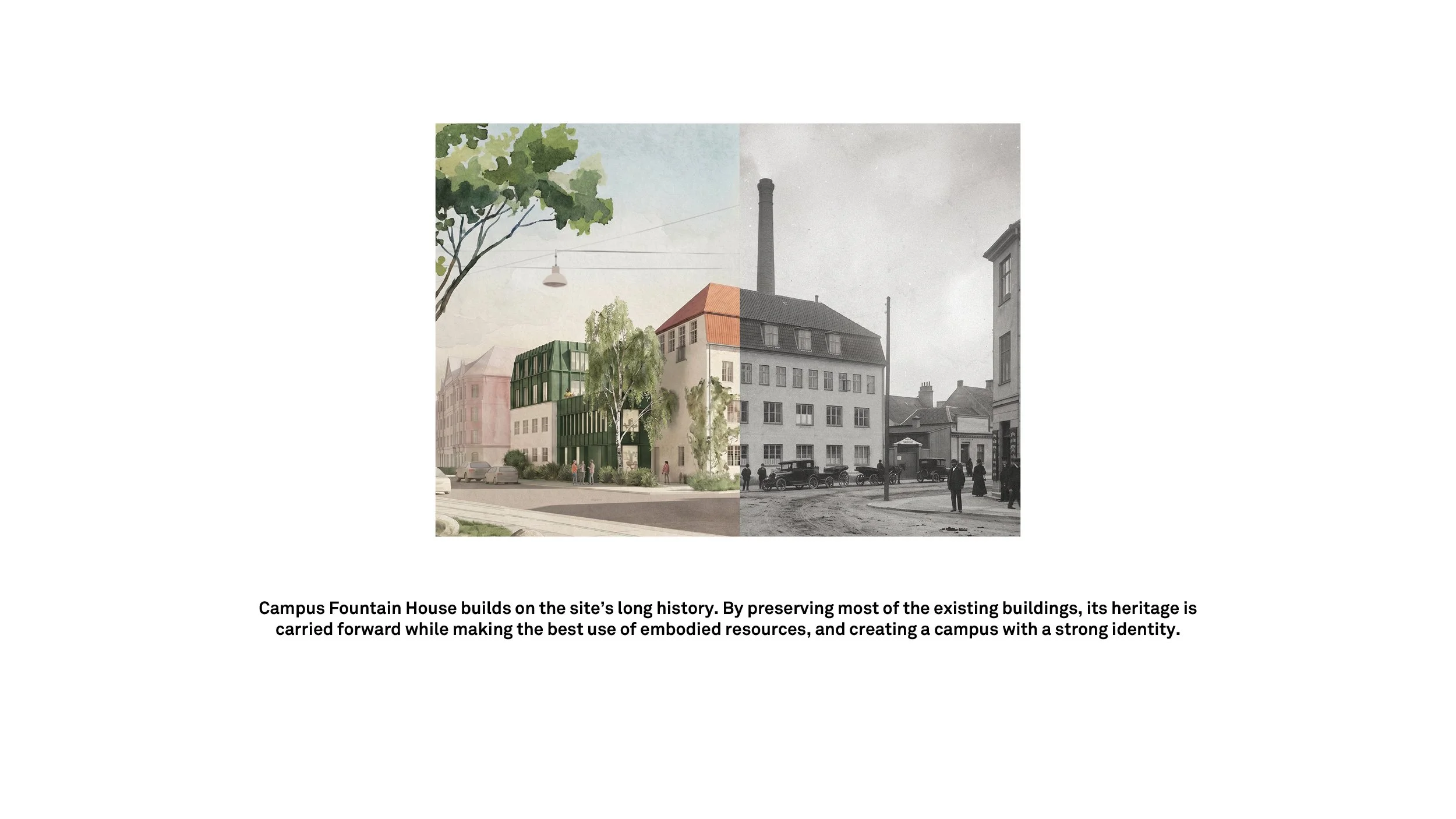
— Campus Fountain House
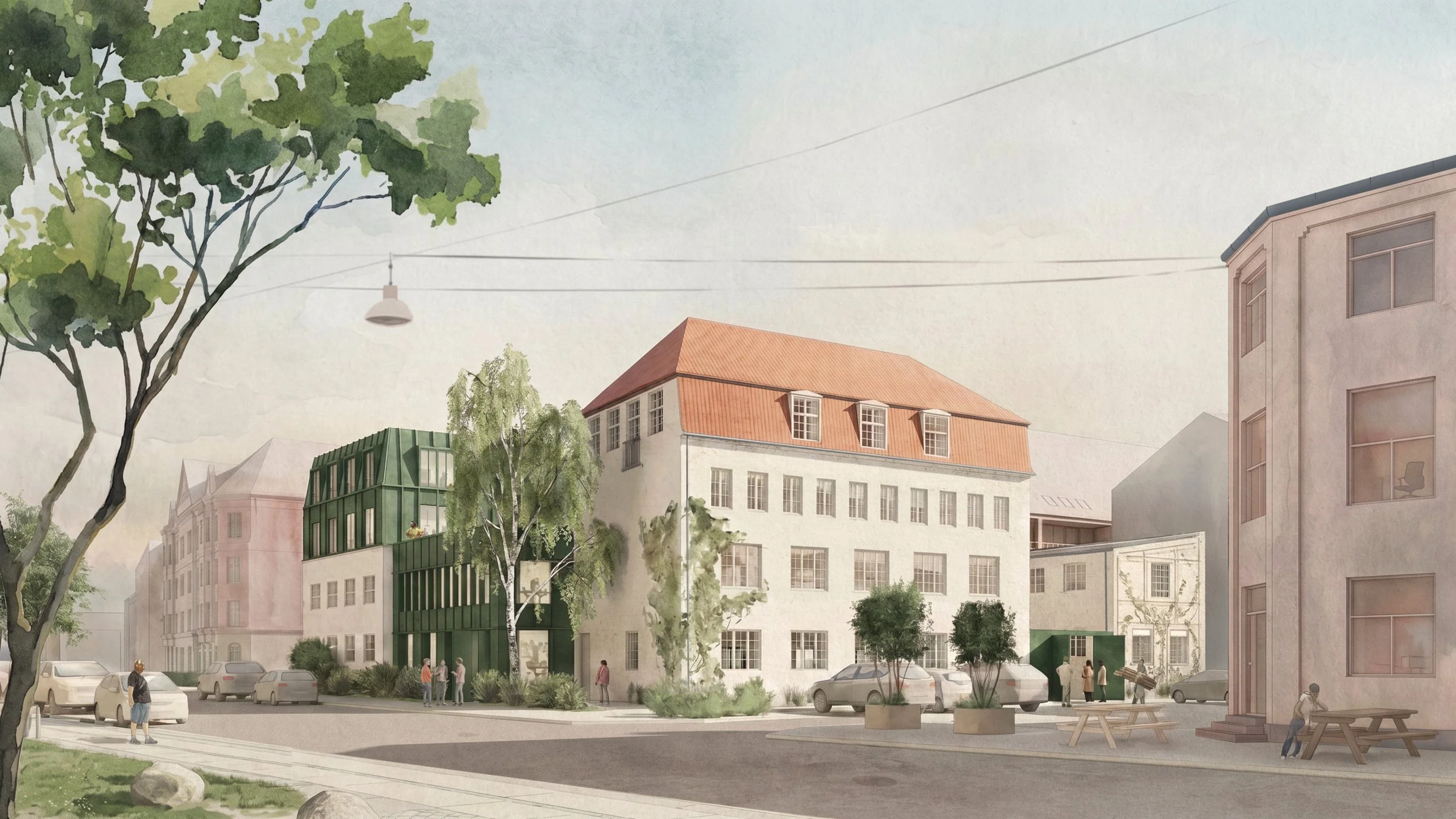
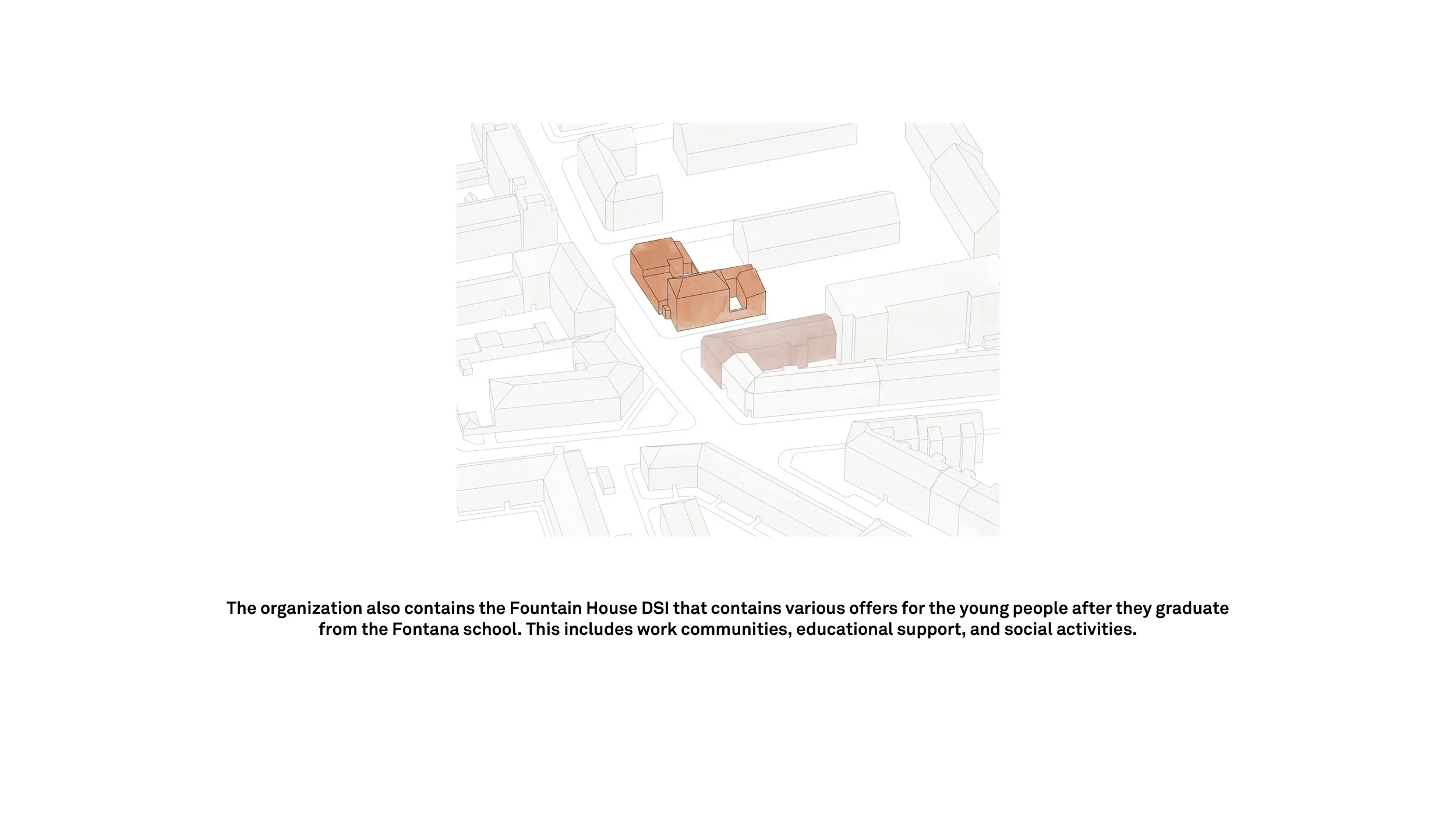
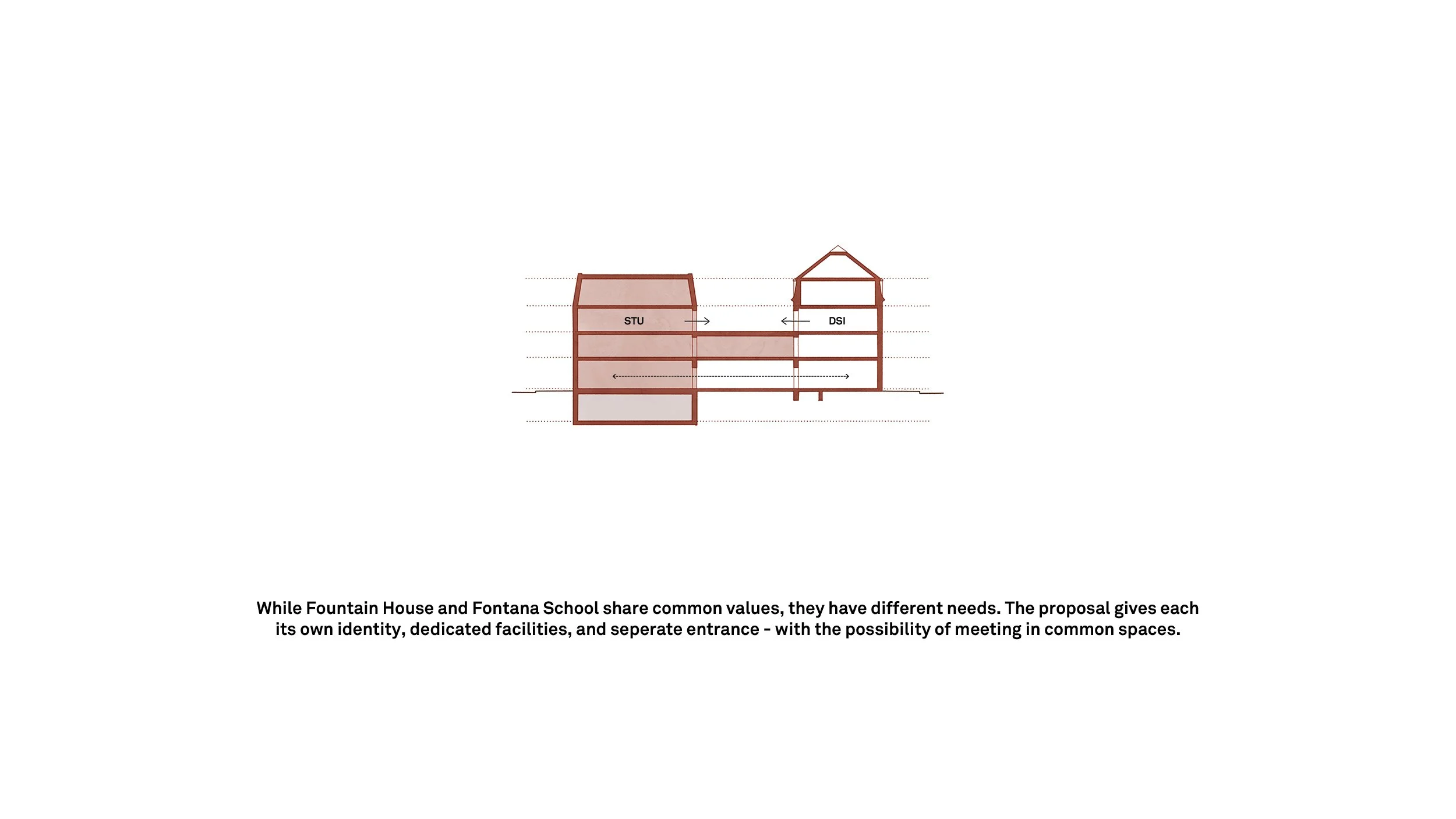
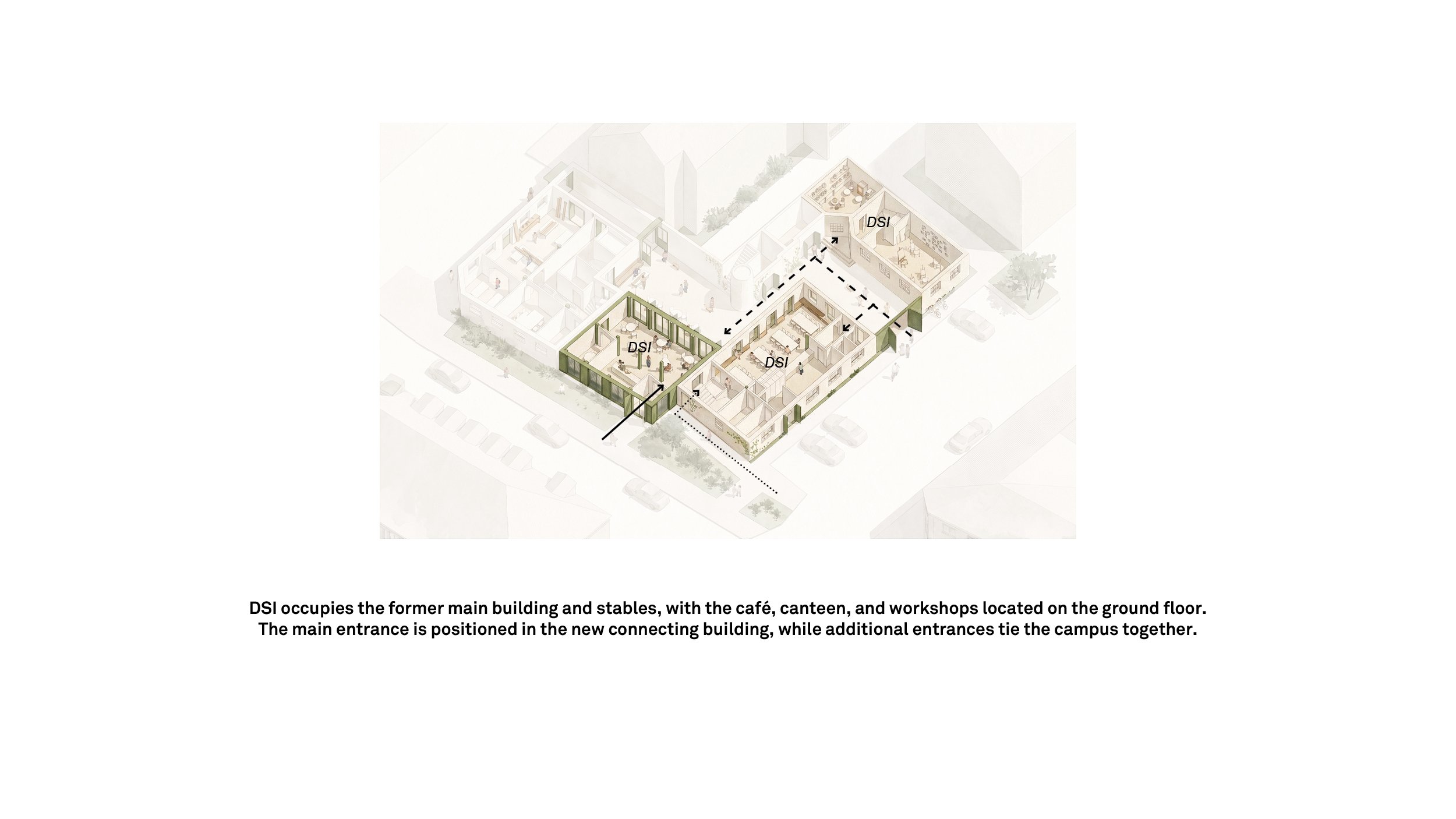
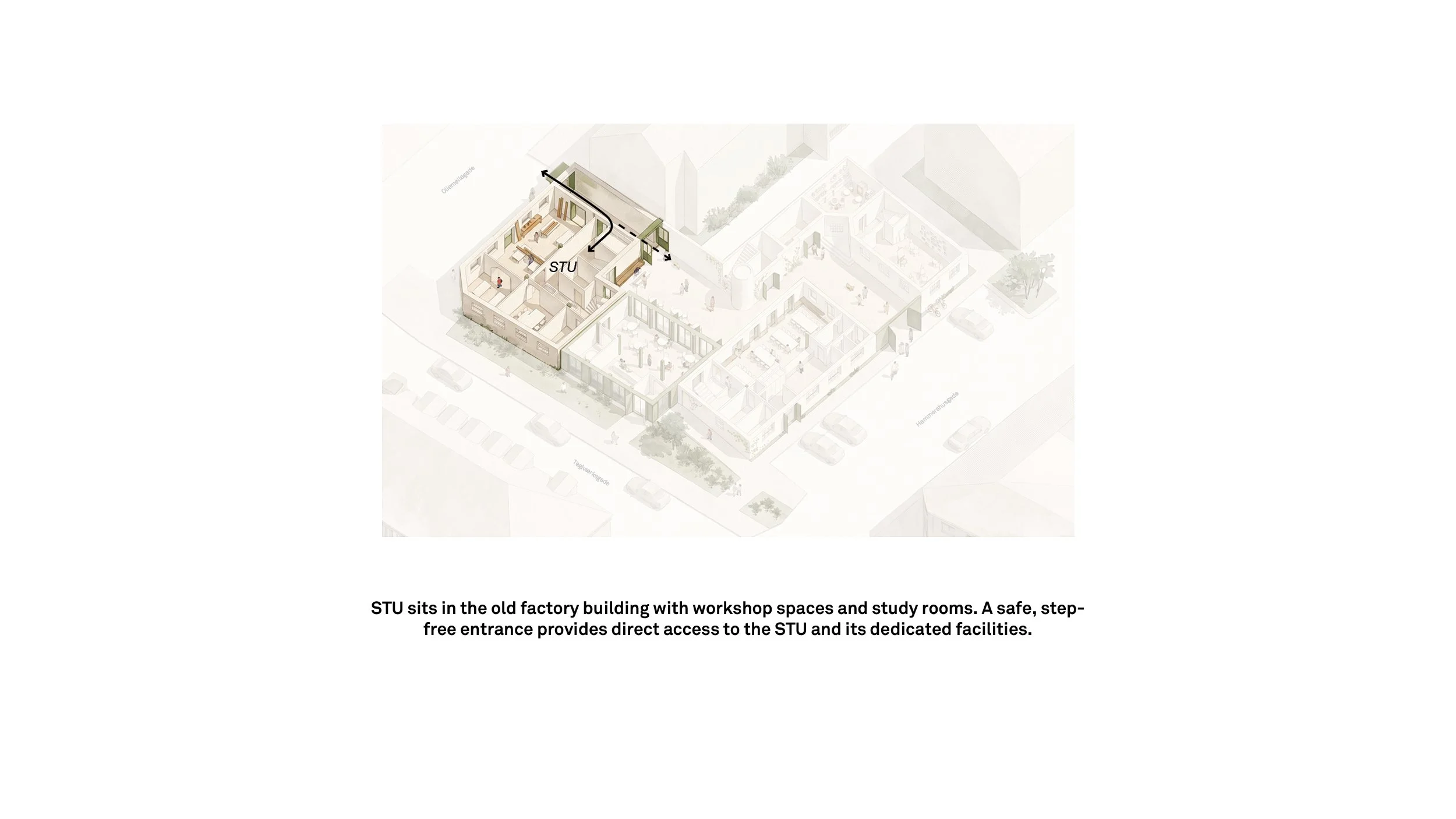
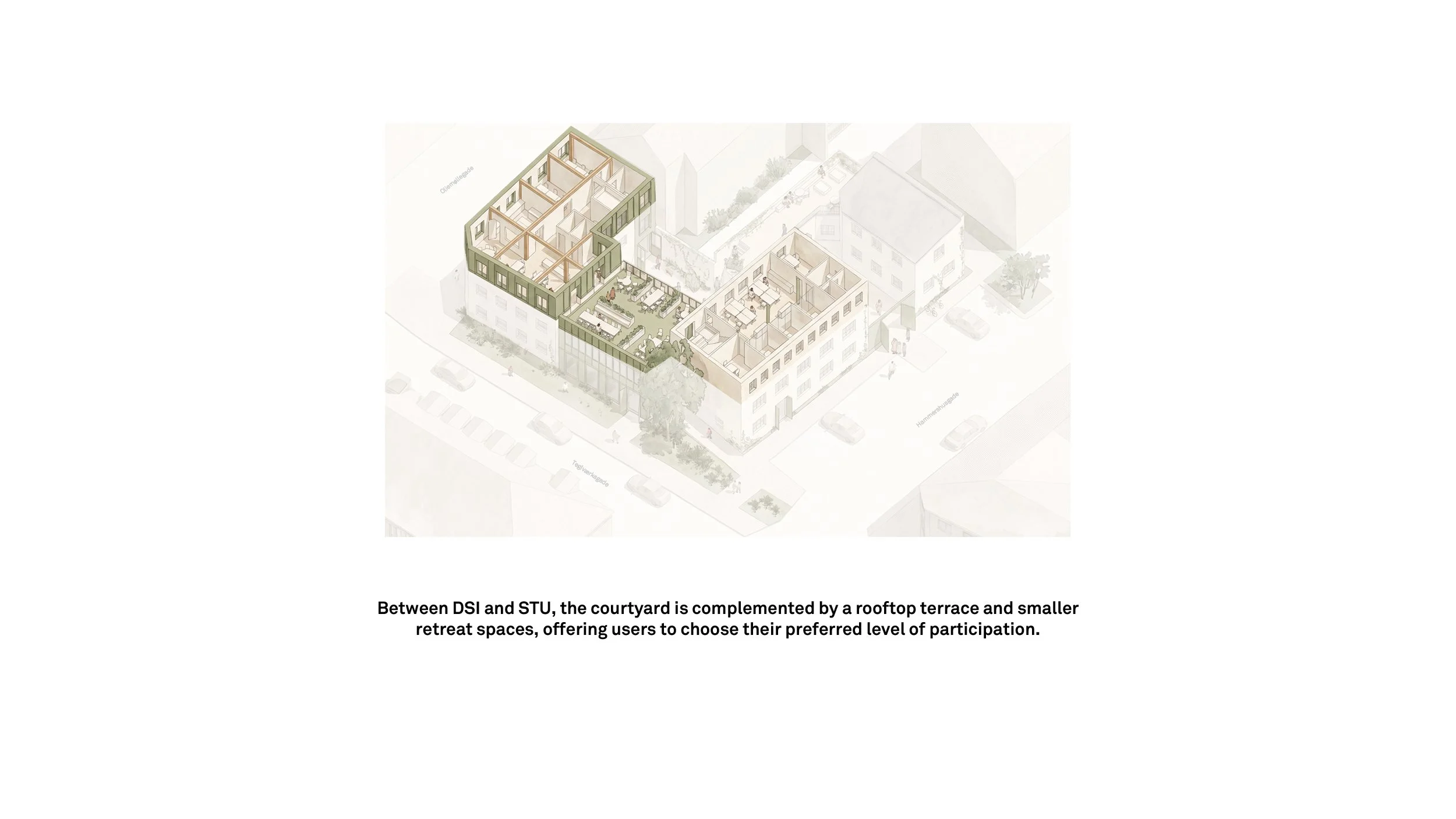
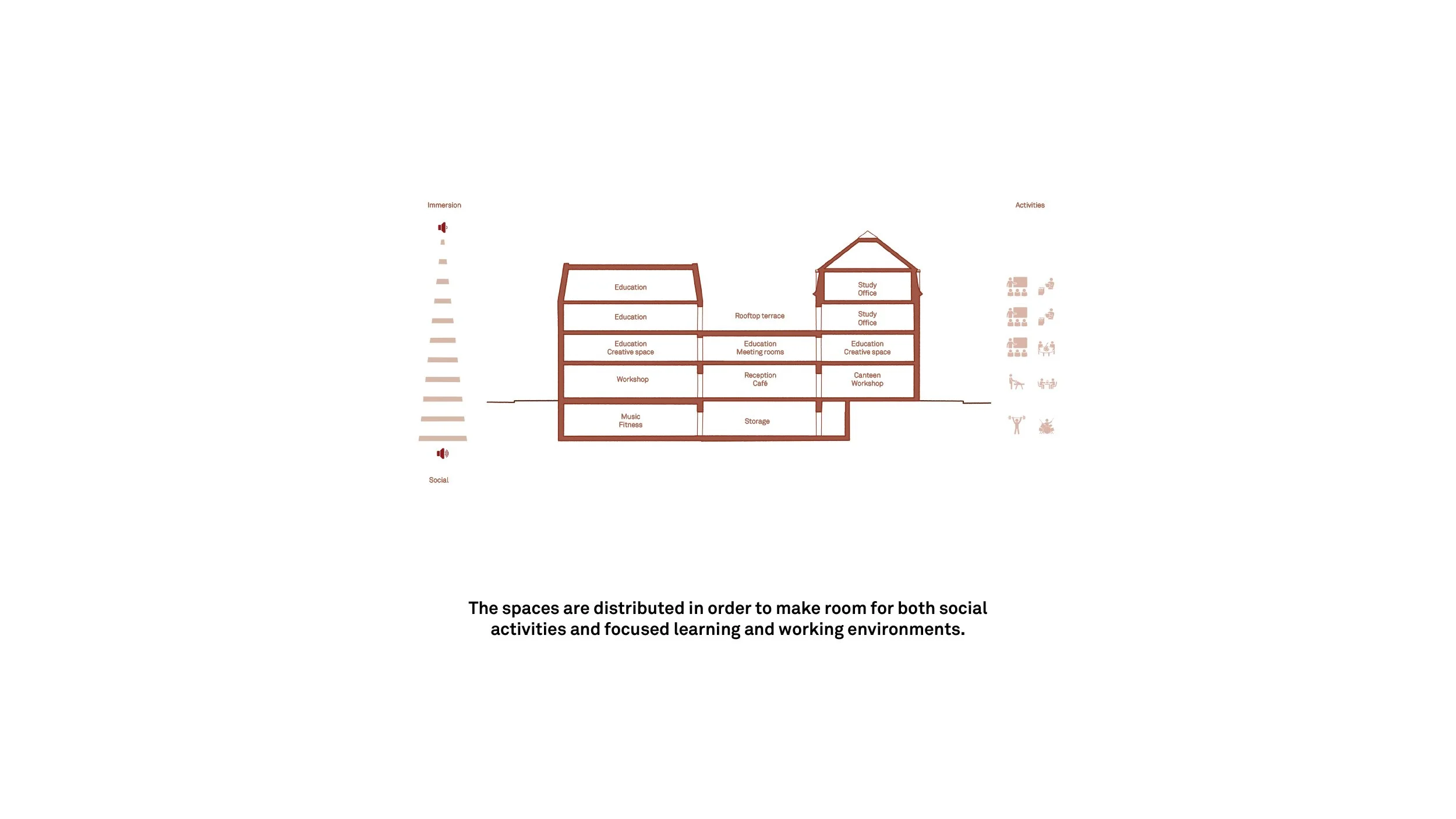
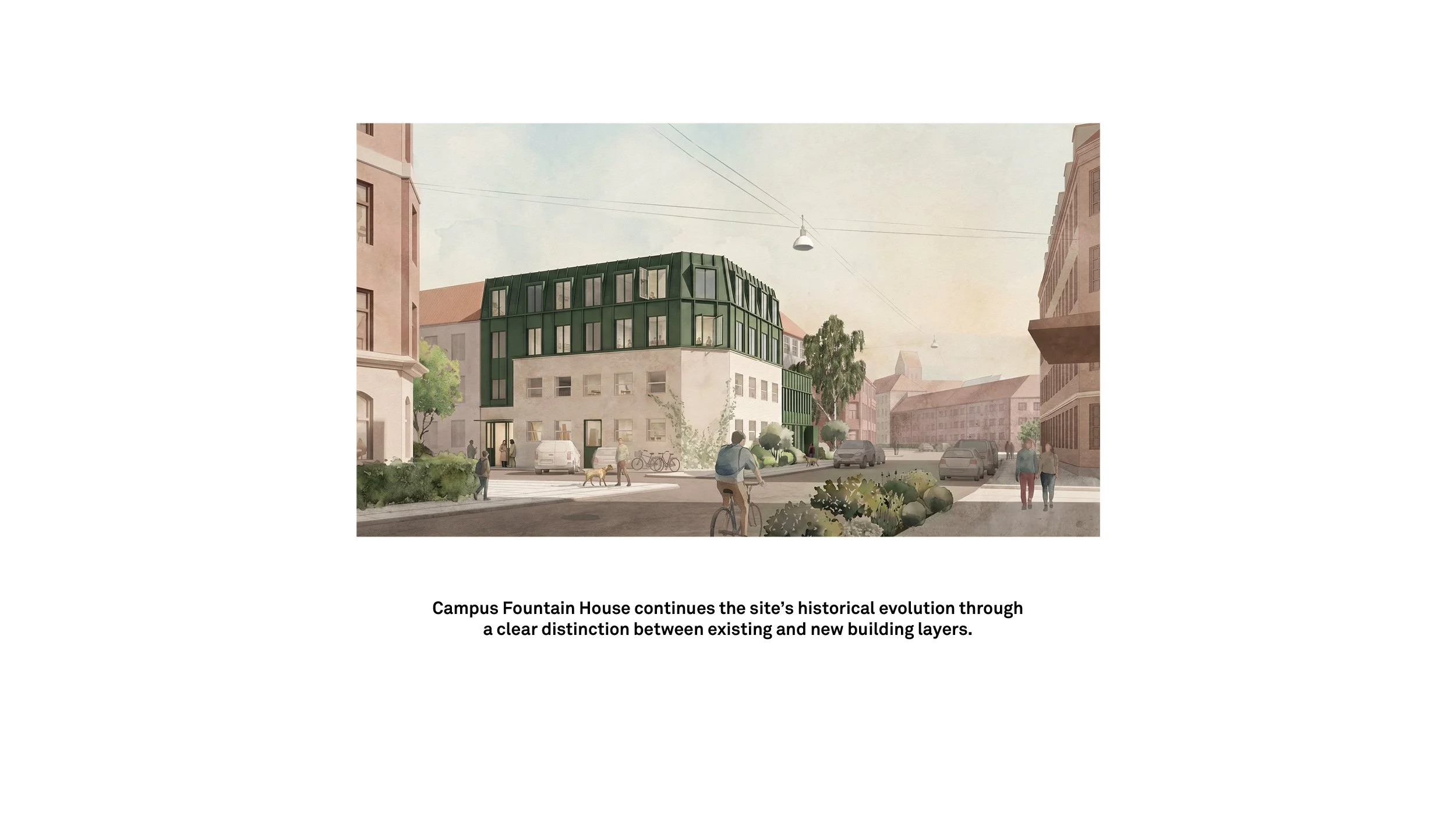
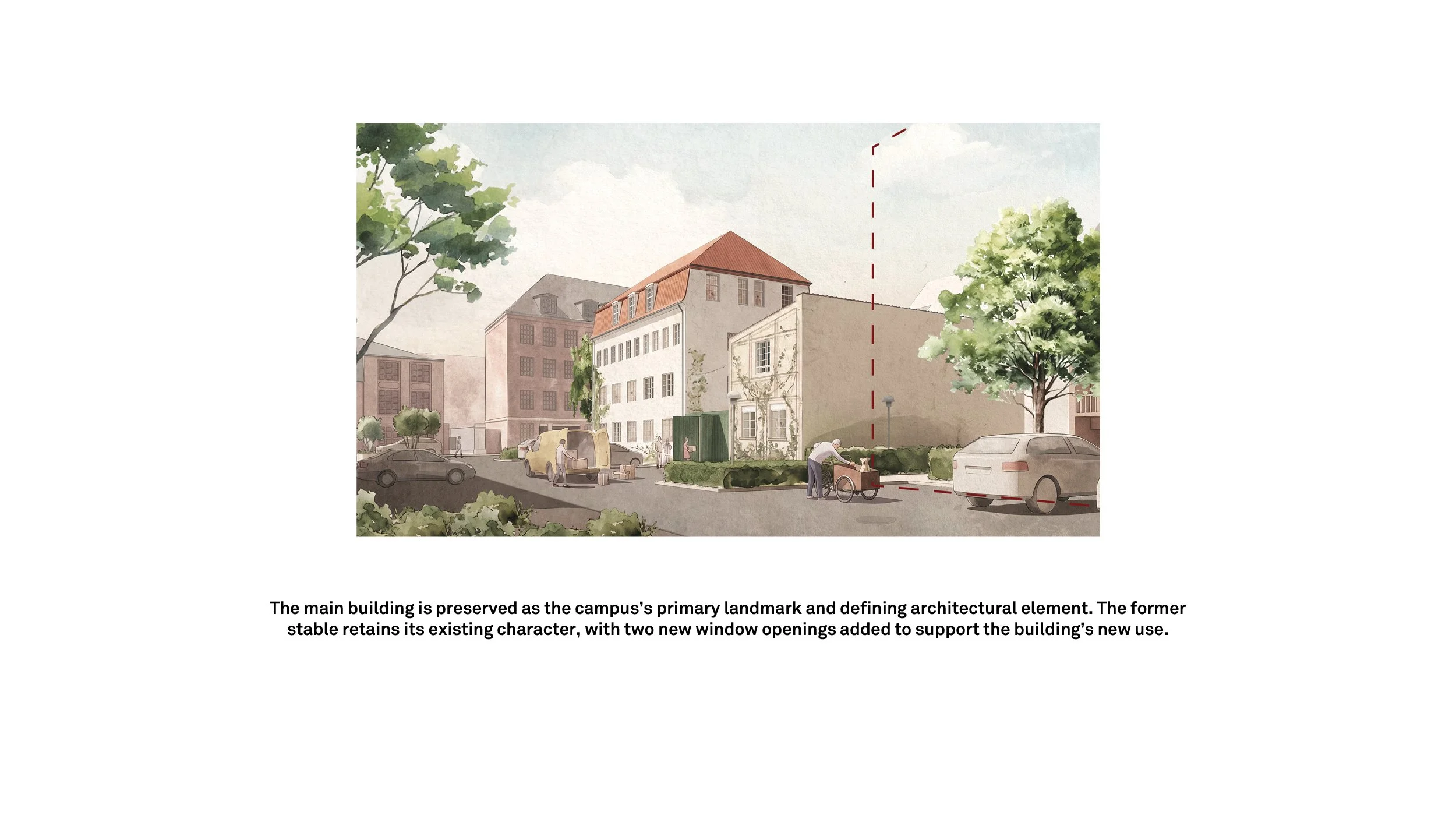
while Fountain House occupies the historic main building together with the former stable and boiler house. A new connecting building acts as both a shared threshold and a carefully balanced buffer between the two communities, allowing interaction when desired while respecting the different needs of students and members.
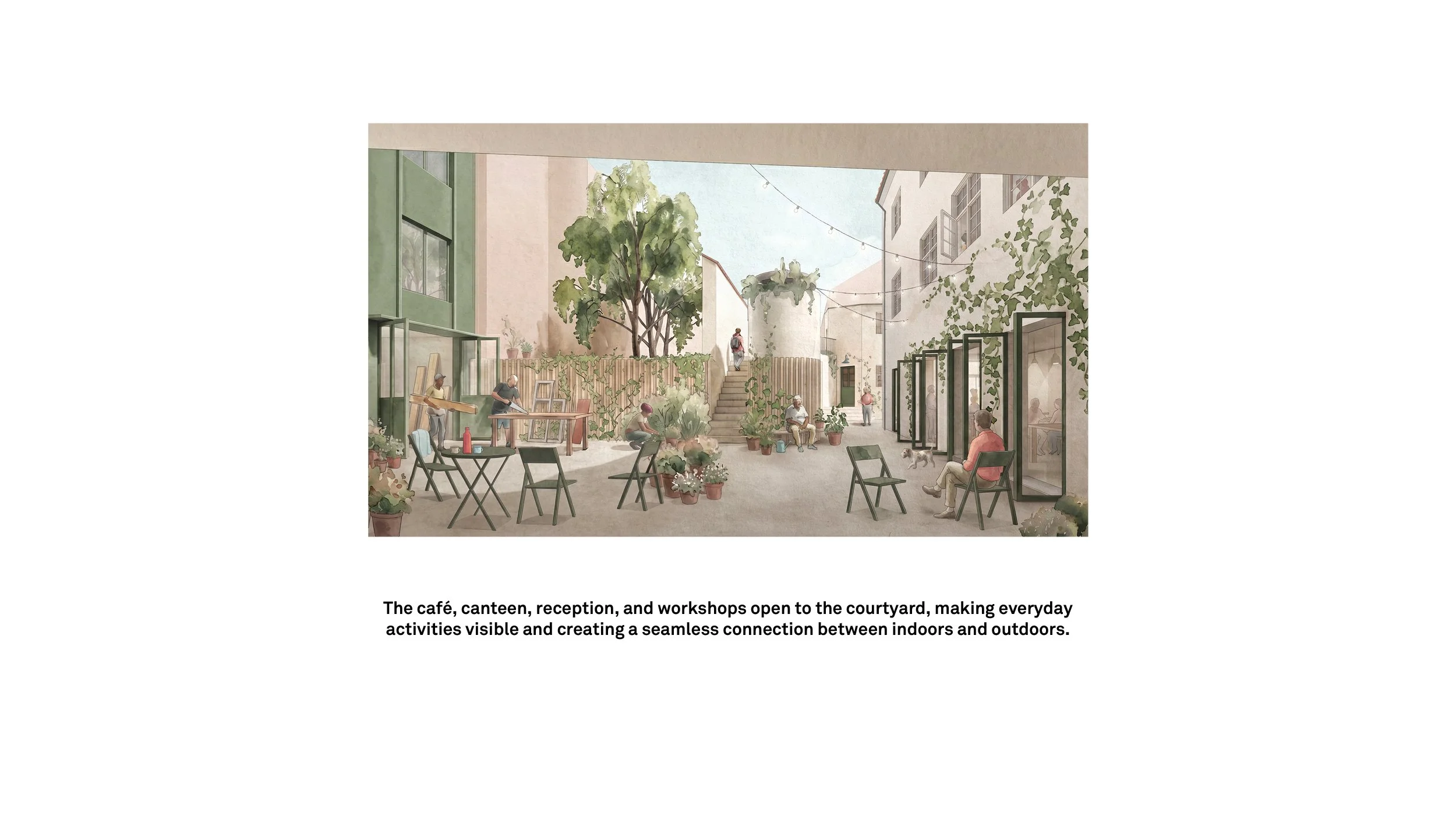
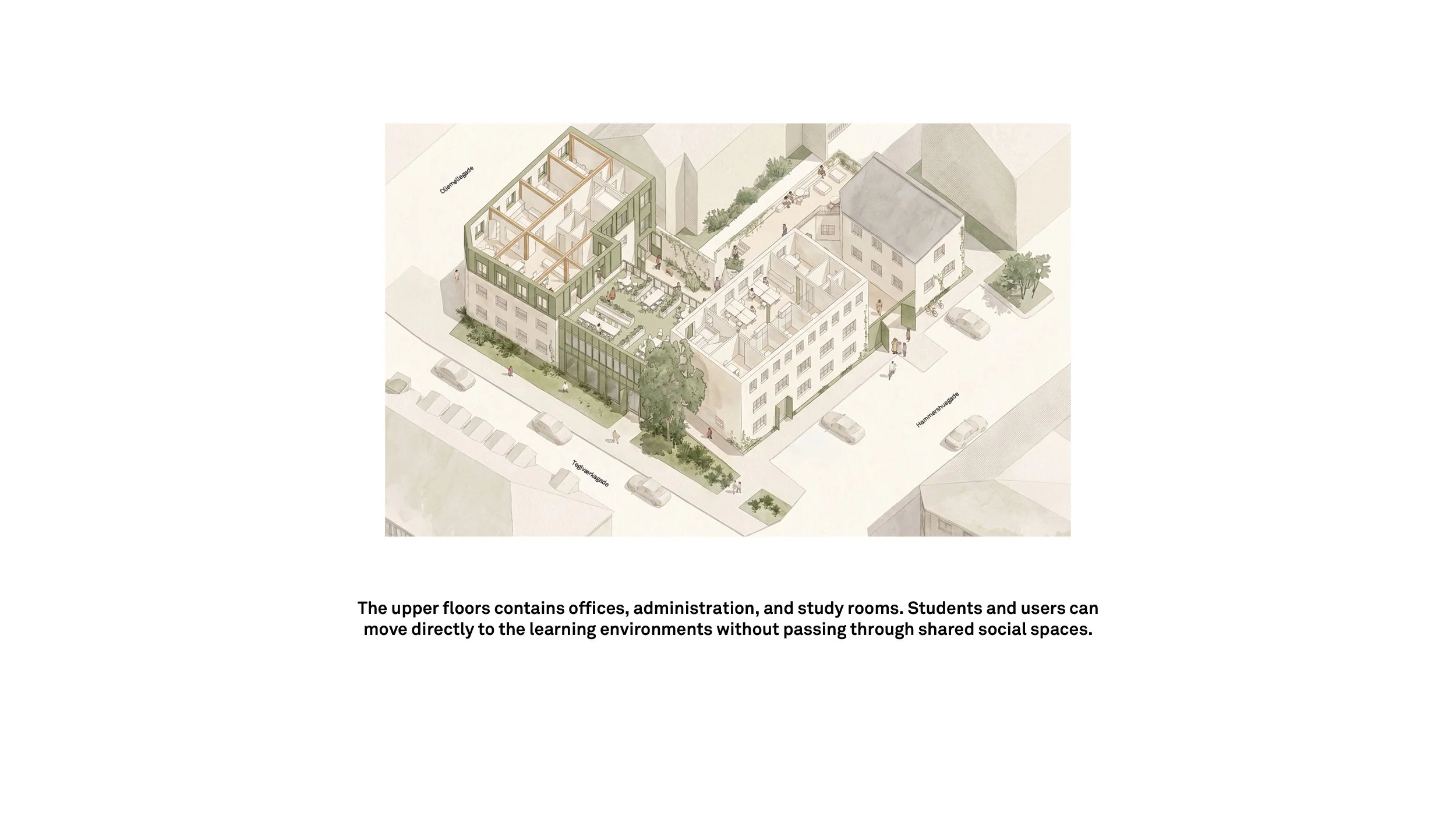
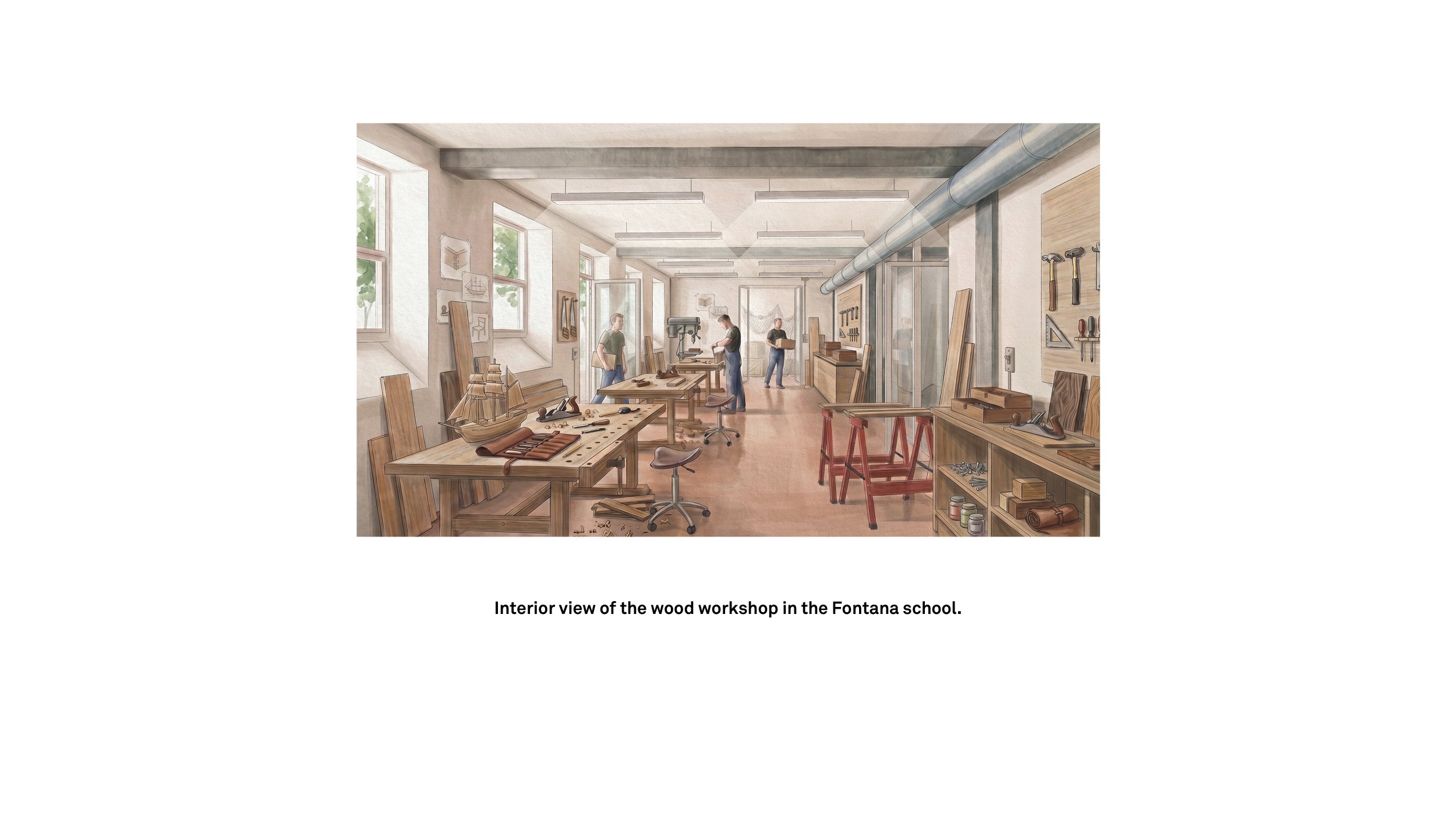
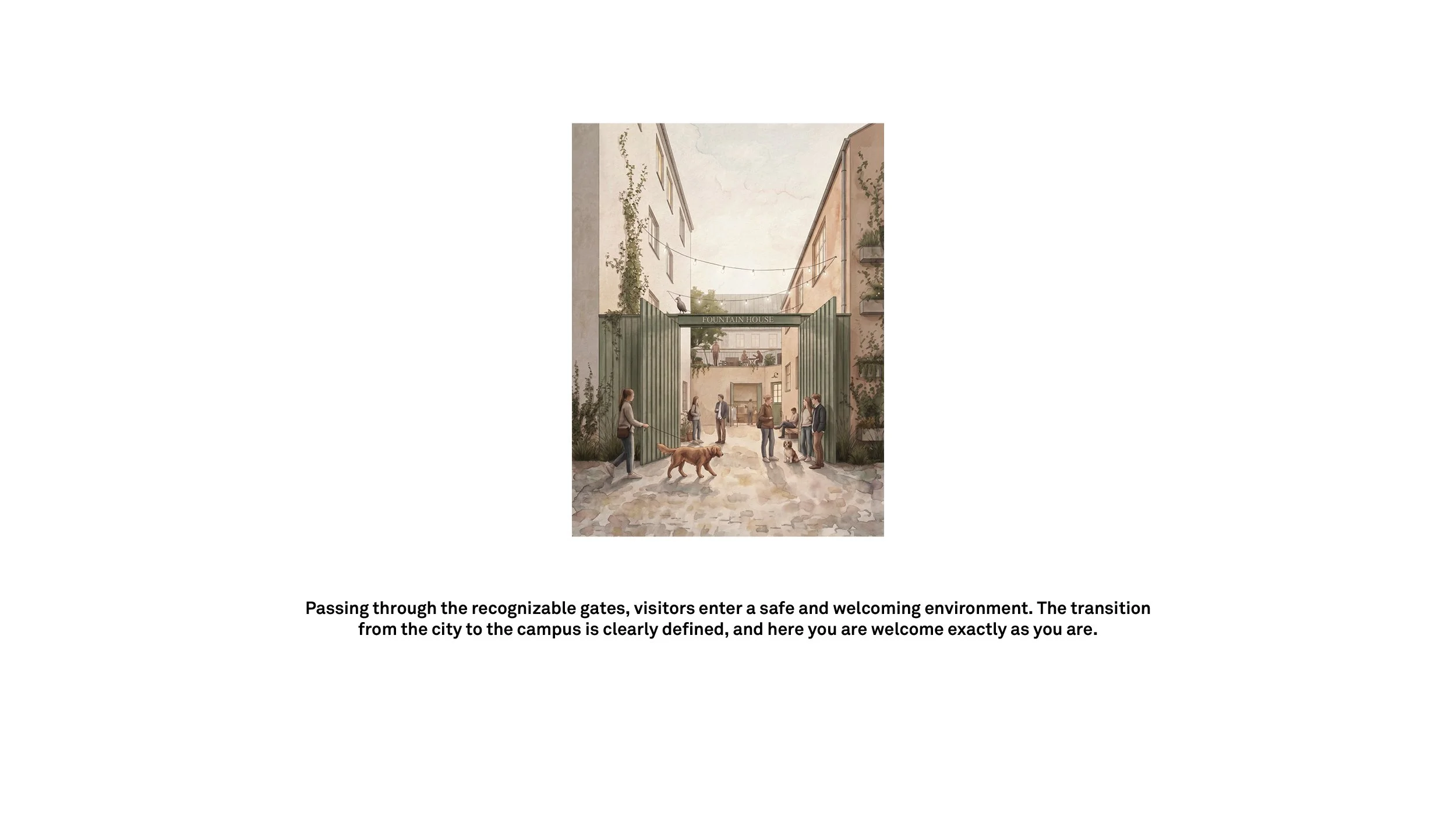
The landscape is conceived as an extension of everyday life inside the buildings. Workshops, café, reception and dining spaces open directly onto the courtyard, creating opportunities for informal meetings and shared activities. Roof terraces and smaller garden spaces provide quieter places for reflection, supporting the recovery philosophy by offering different degrees of participation, privacy and social interaction.
By combining careful preservation with strategic transformation, the proposal demonstrates how an existing industrial complex can be reimagined as a resilient and inclusive campus. Rather than imposing a new identity on the site, the project reveals and strengthens the qualities already embedded in its architecture, creating a place where history, community and everyday life become the foundation for future development.
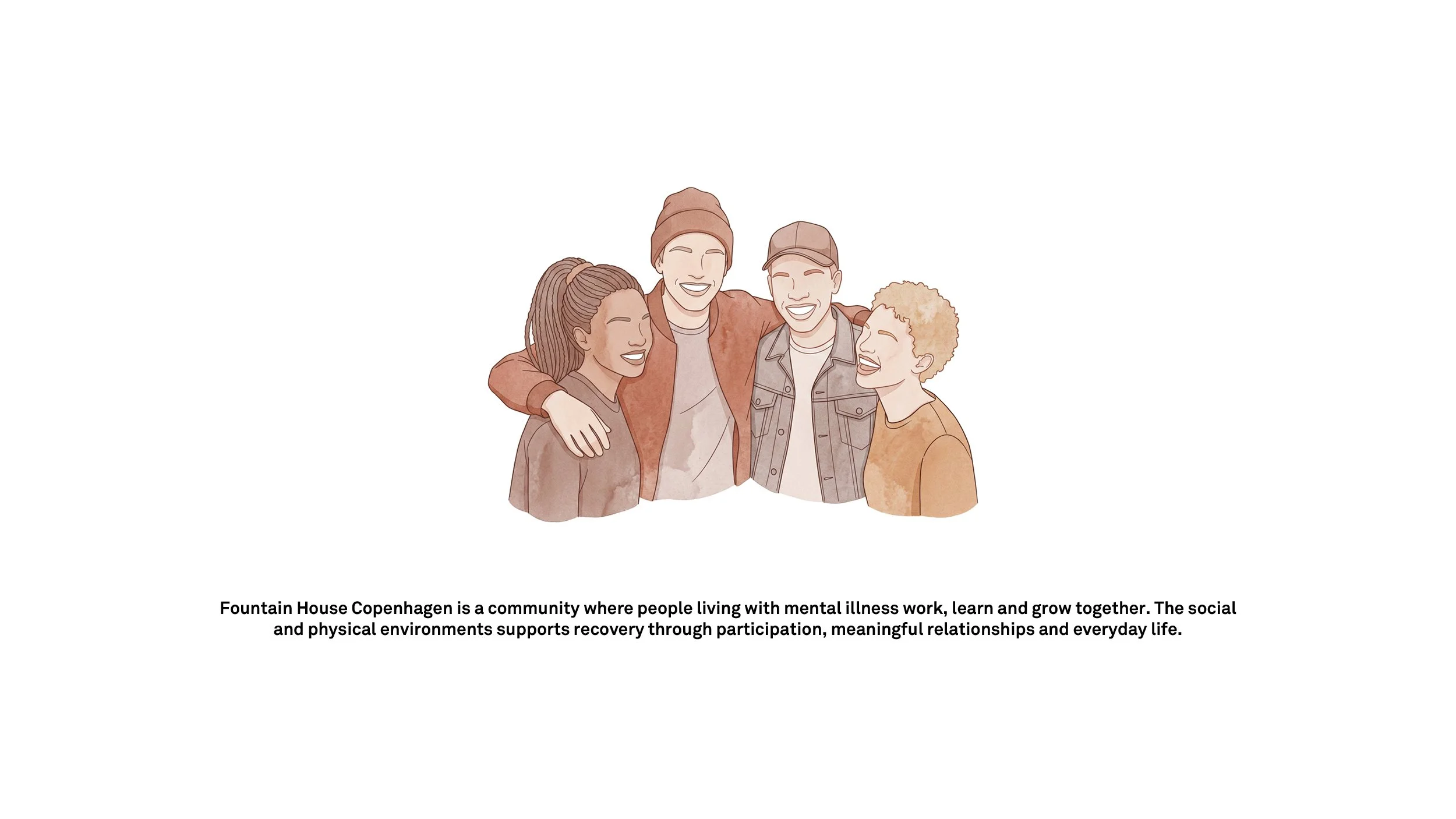
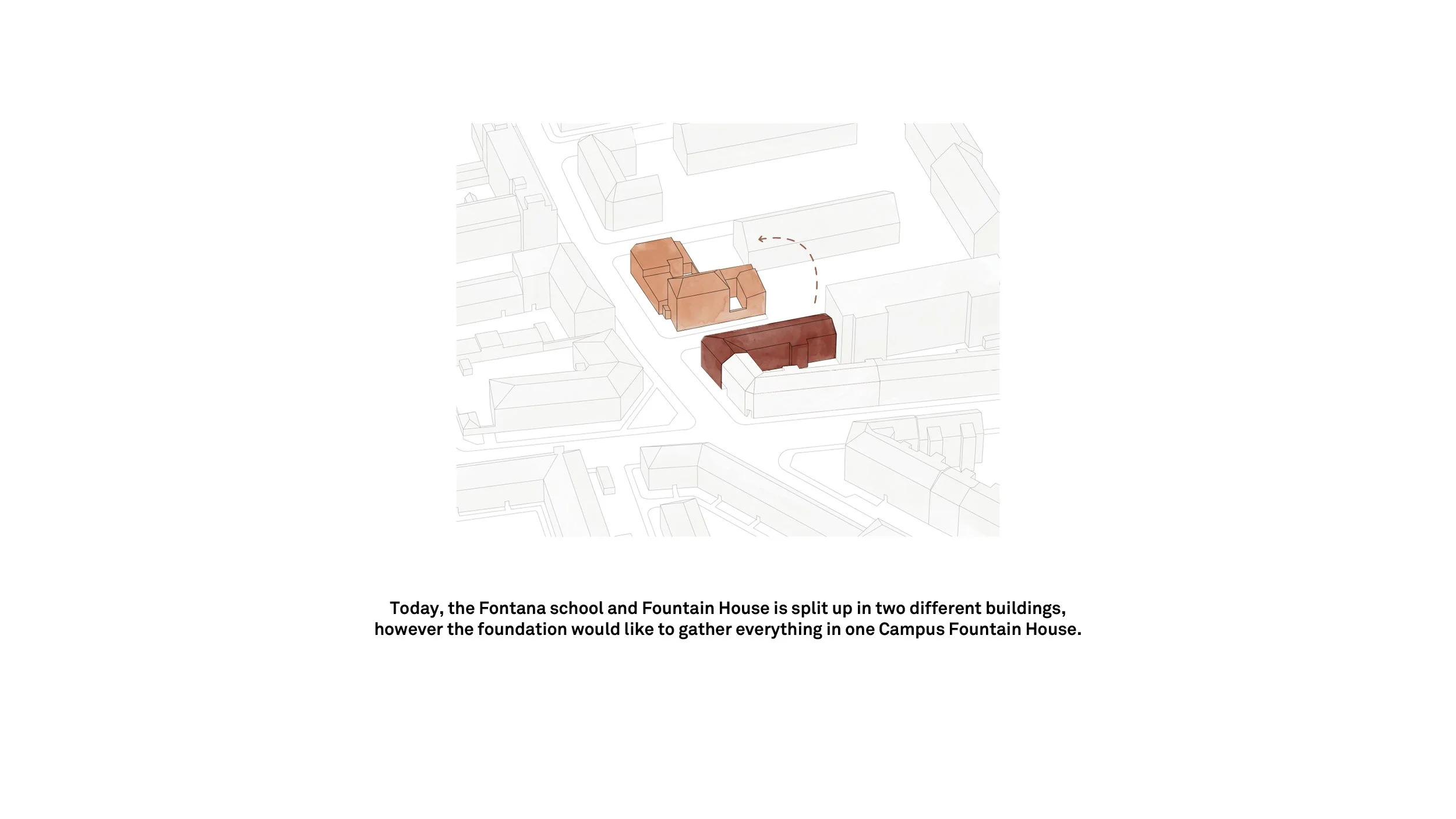
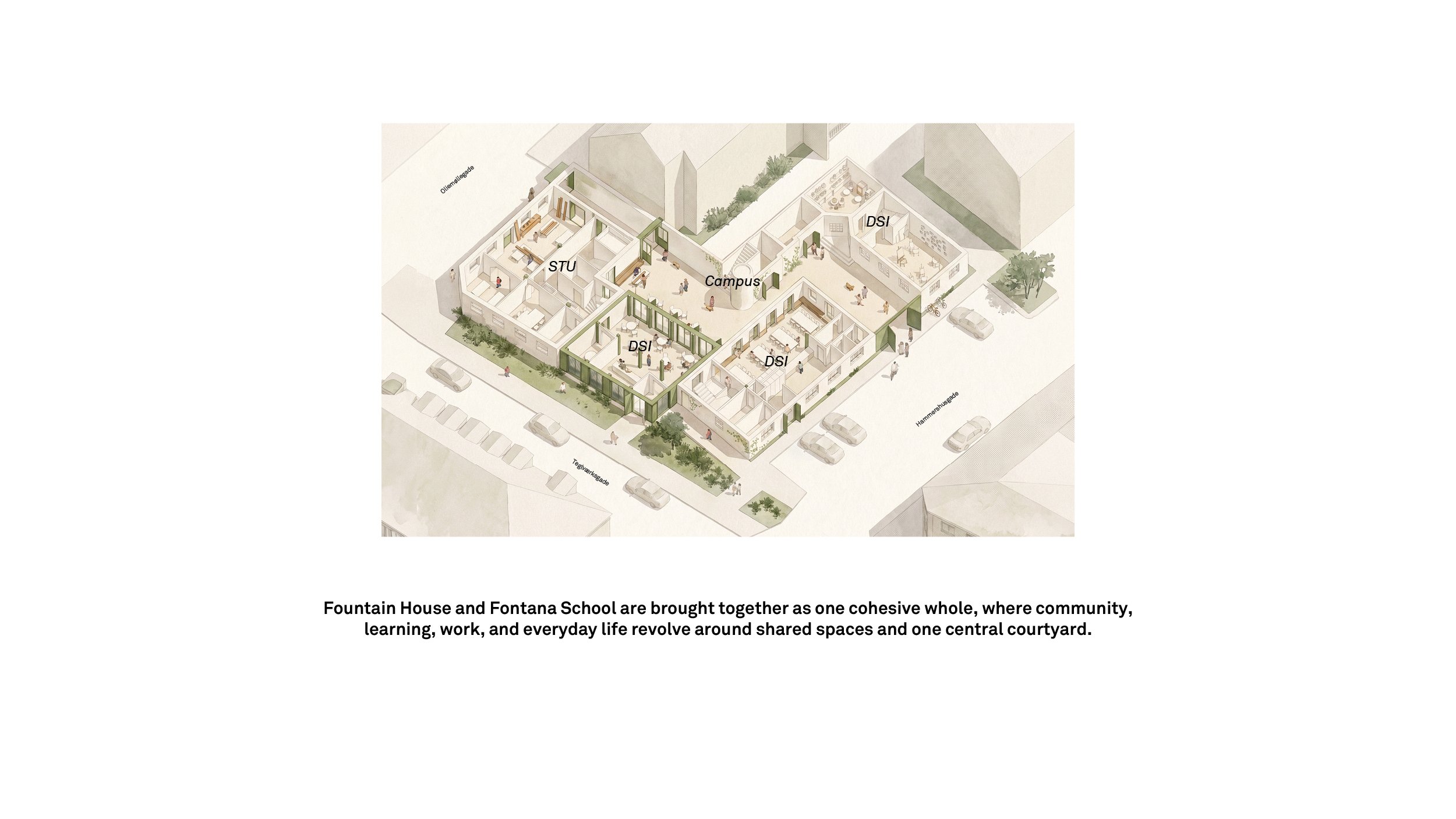
Campus Fountain House brings together Fountain House Copenhagen and Fontanaskolen STU on a single site, creating a shared campus that supports recovery, learning and everyday life while respecting the unique needs of both organizations.
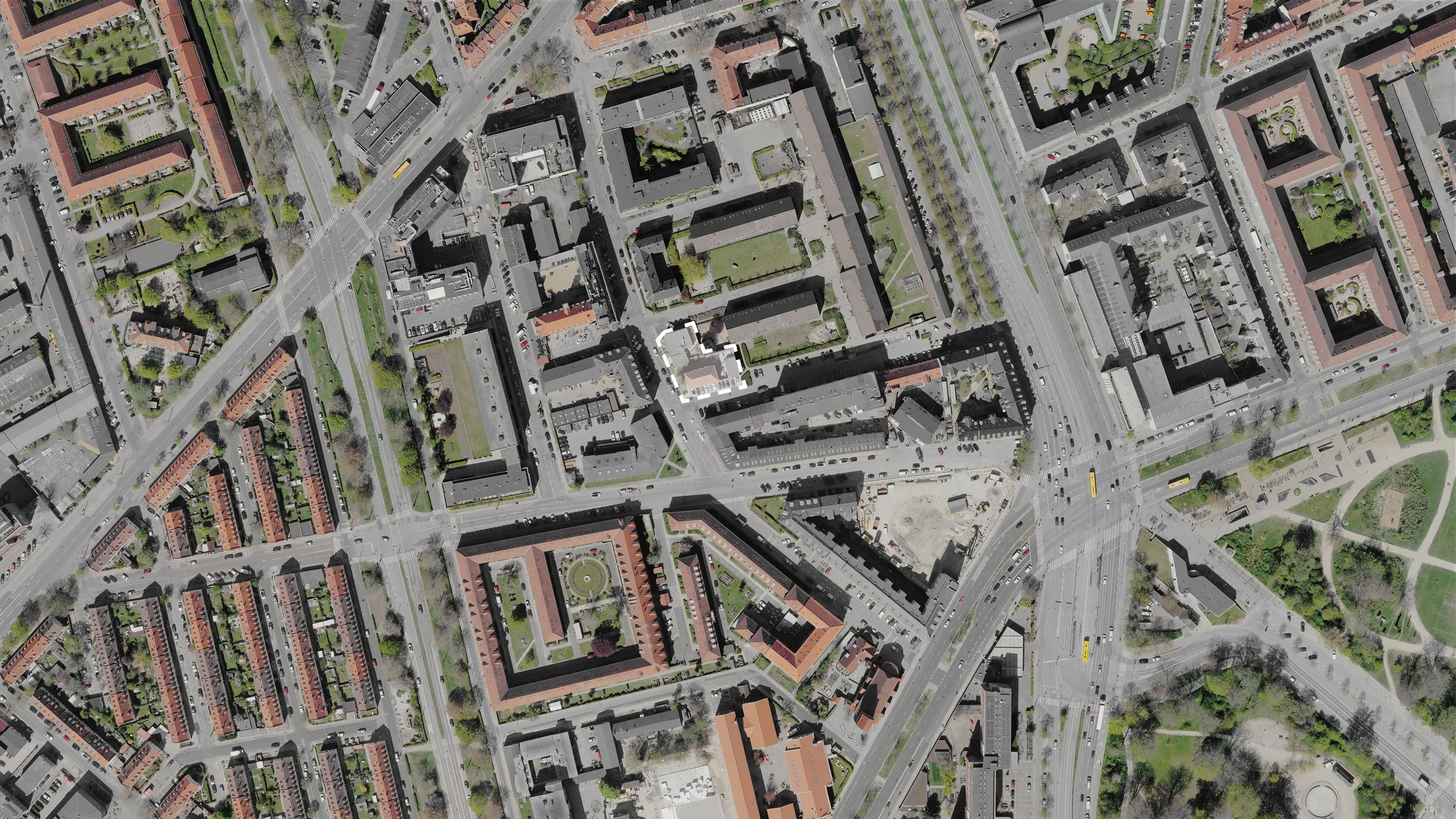
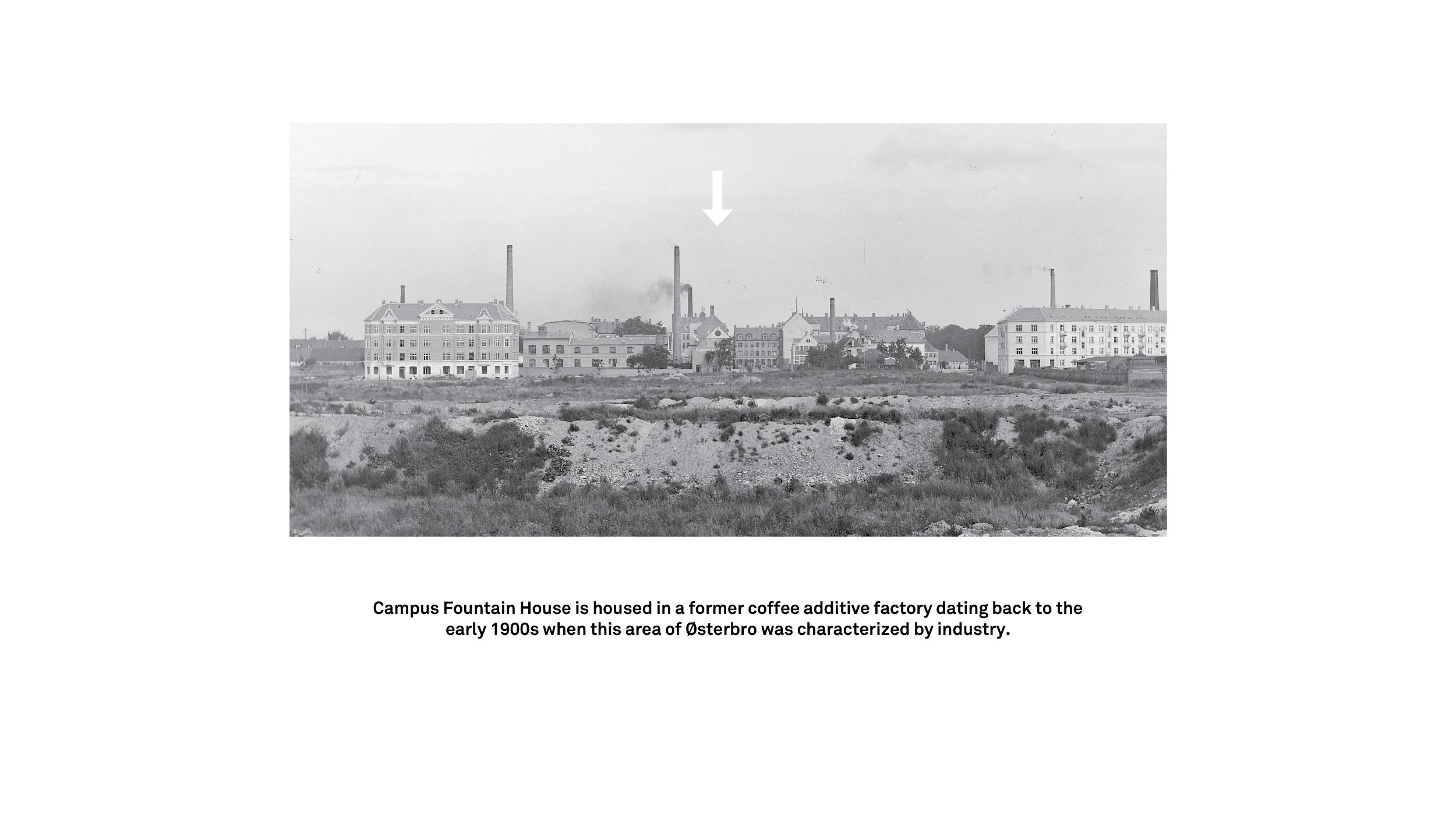
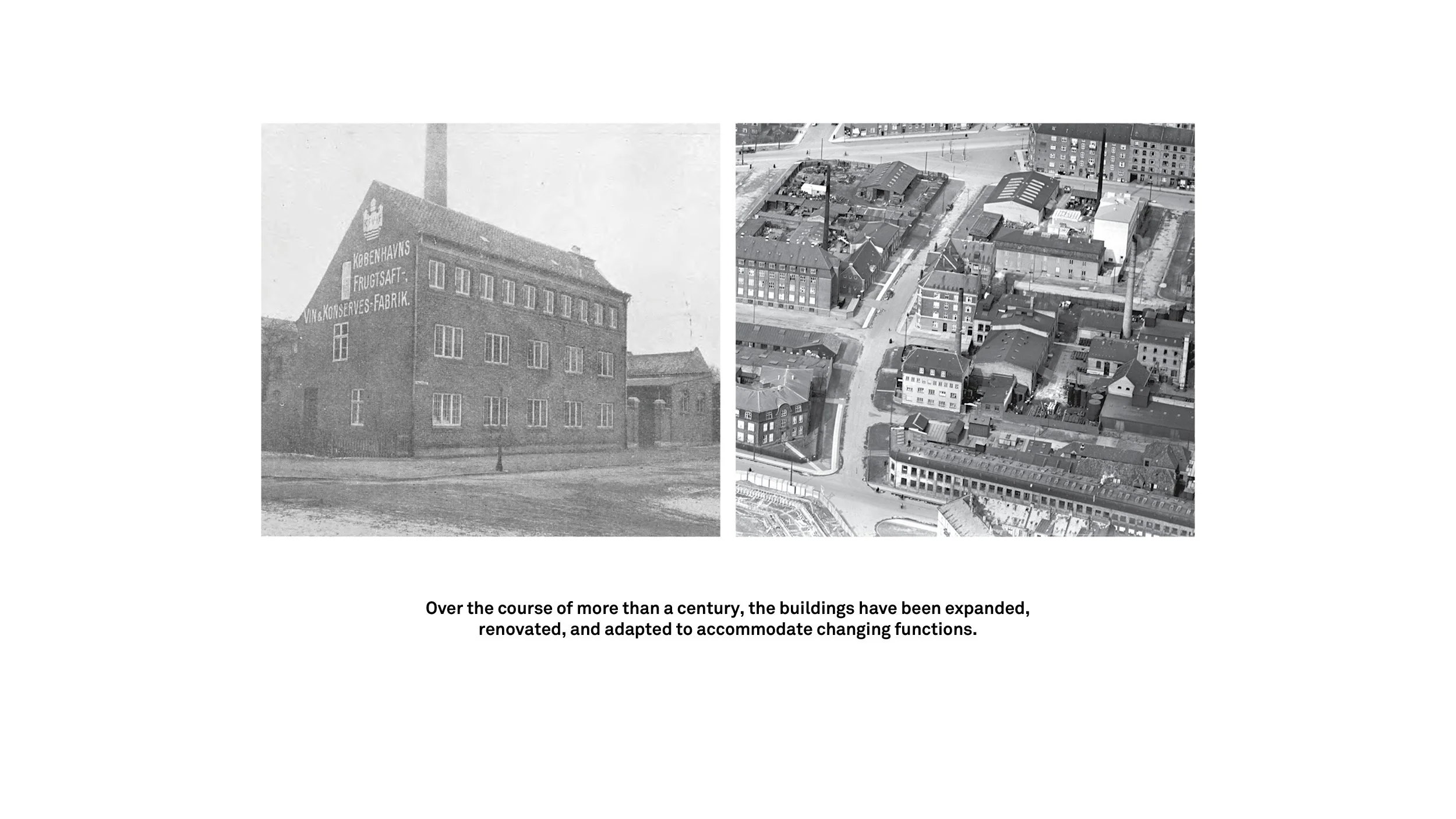
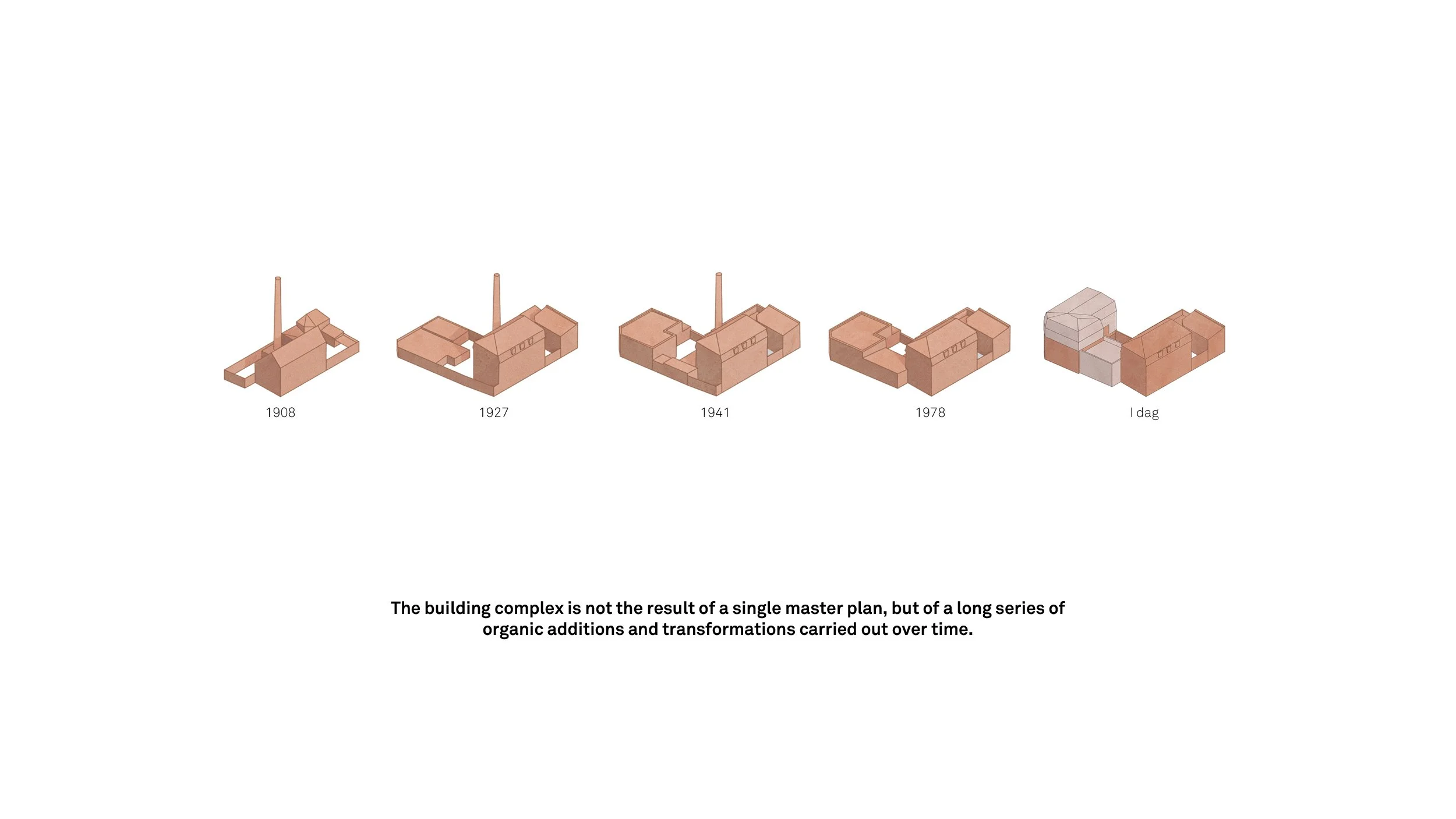
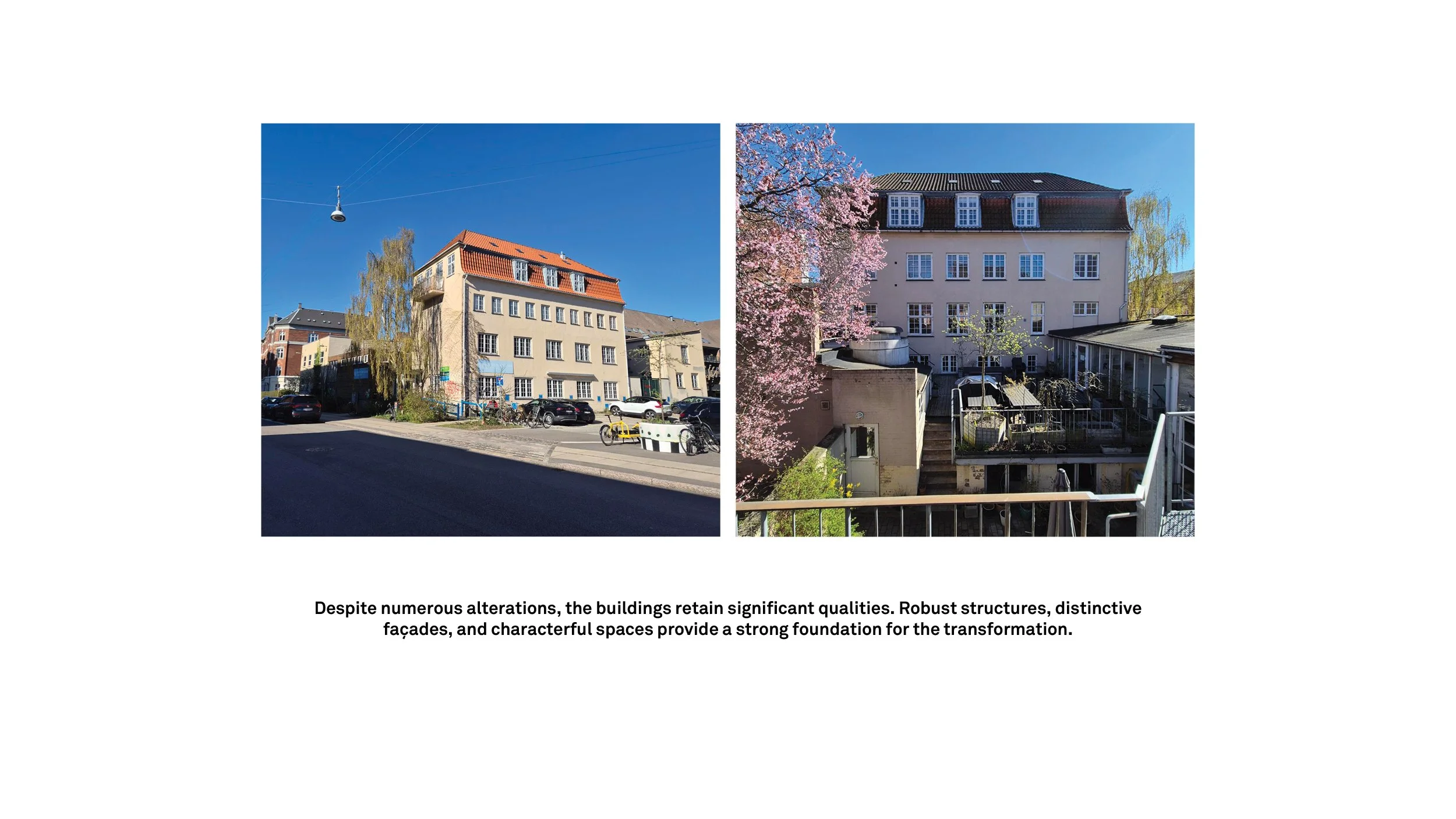
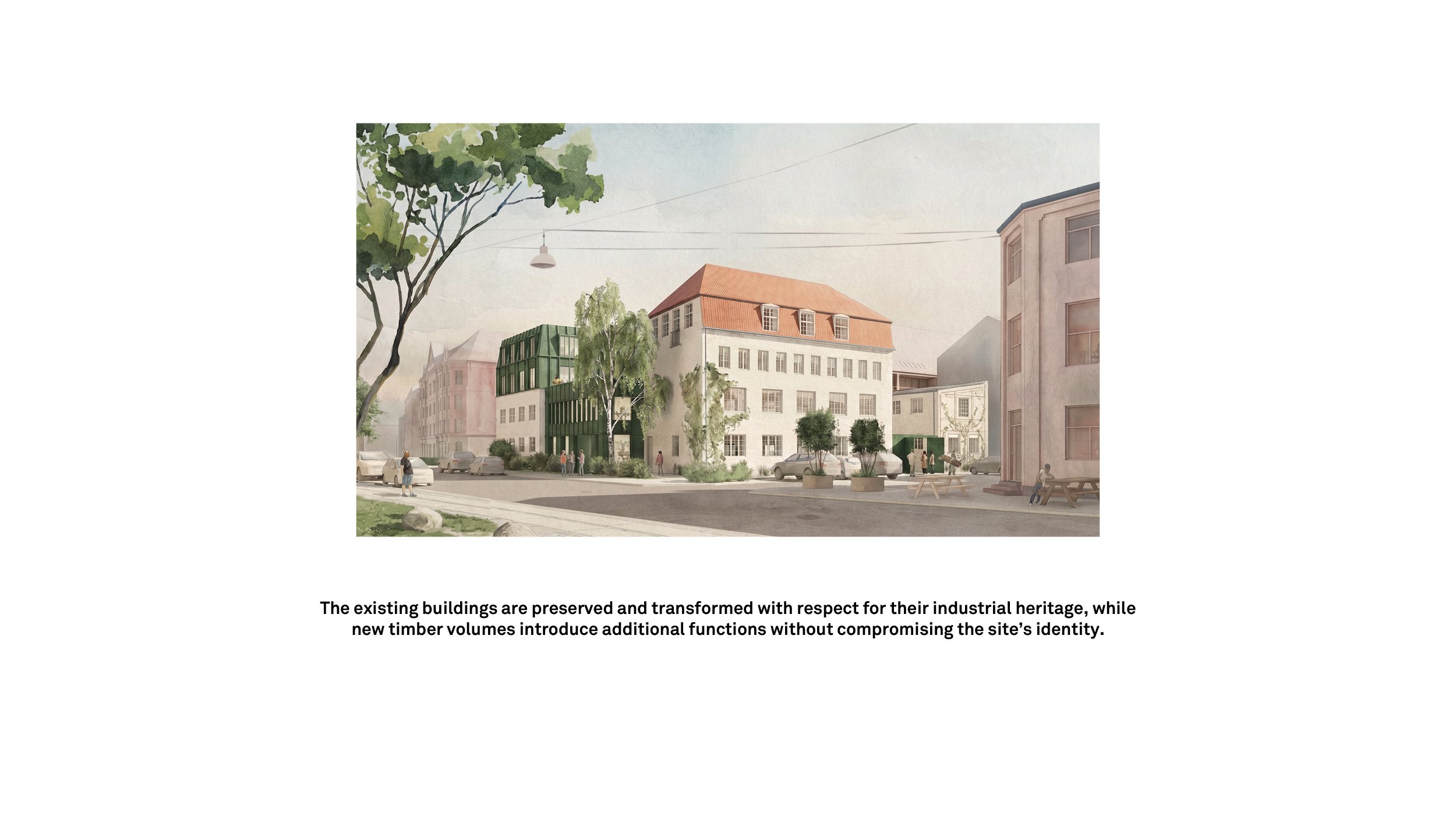
The project transforms a former coffee substitute factory that has evolved organically over more than a century. Rather than replacing the existing buildings, the proposal builds upon their robust character and industrial heritage. Four historic buildings are preserved and carefully renovated, while targeted additions provide the space and flexibility required for the future campus.
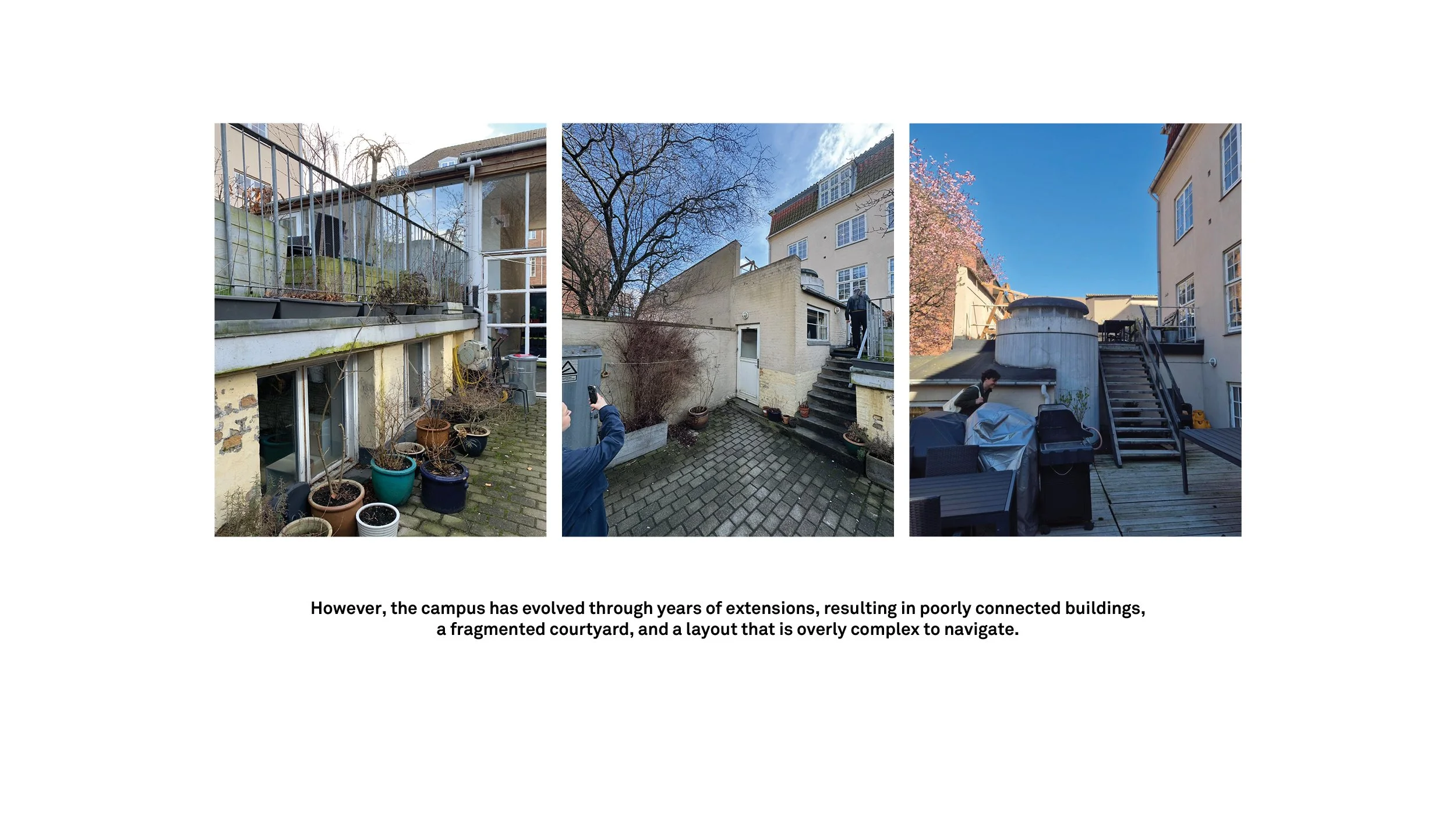
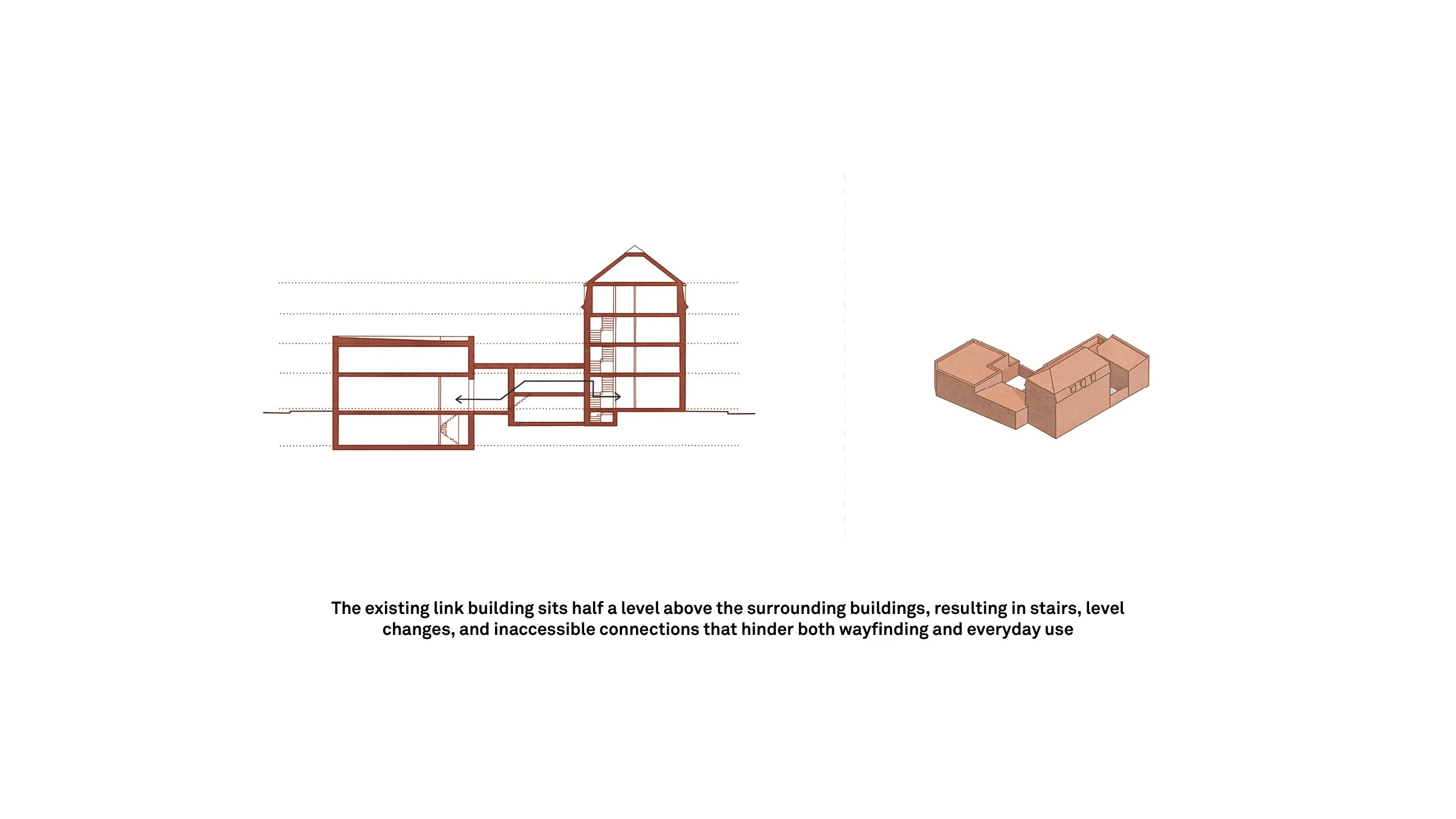
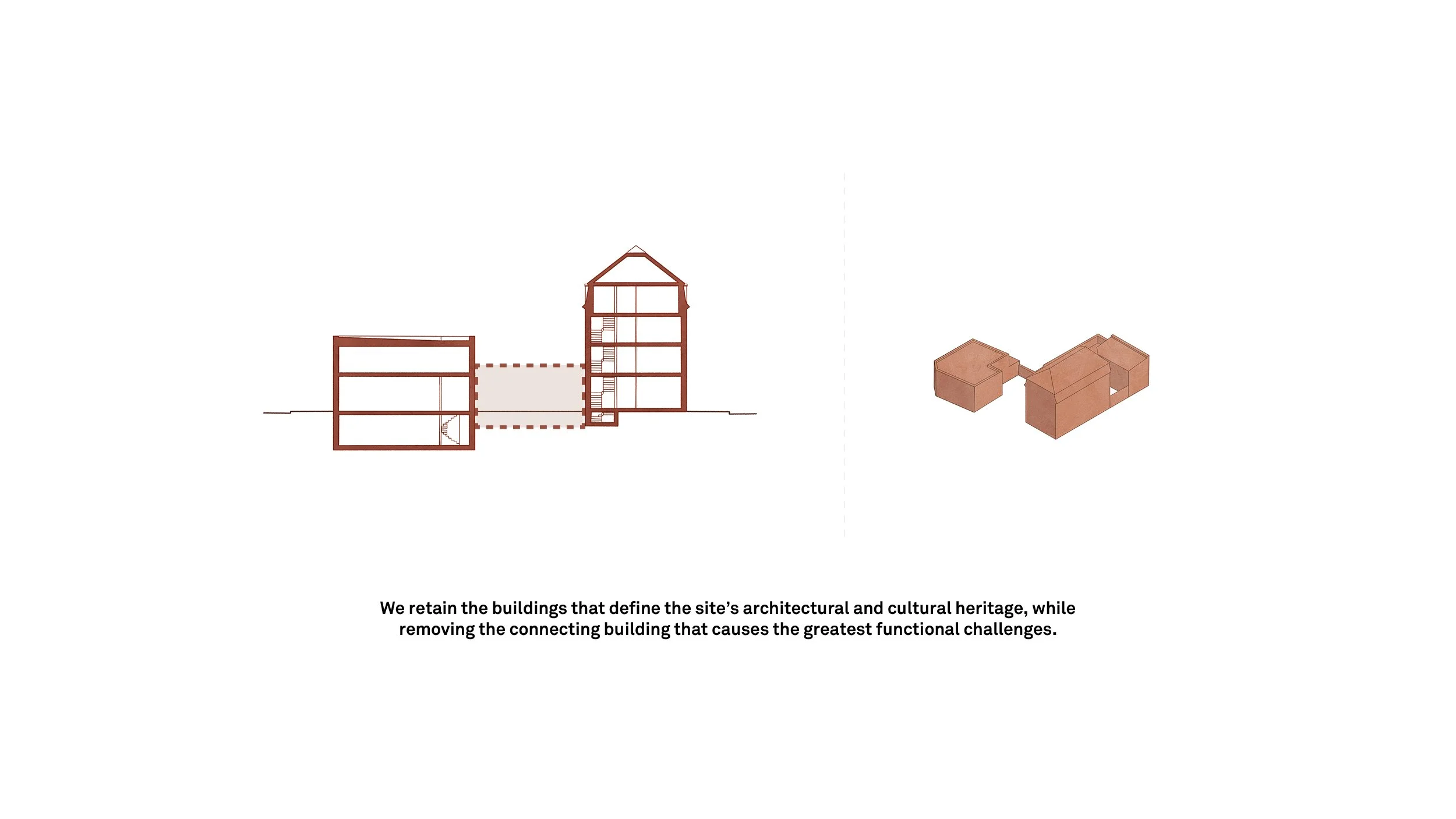
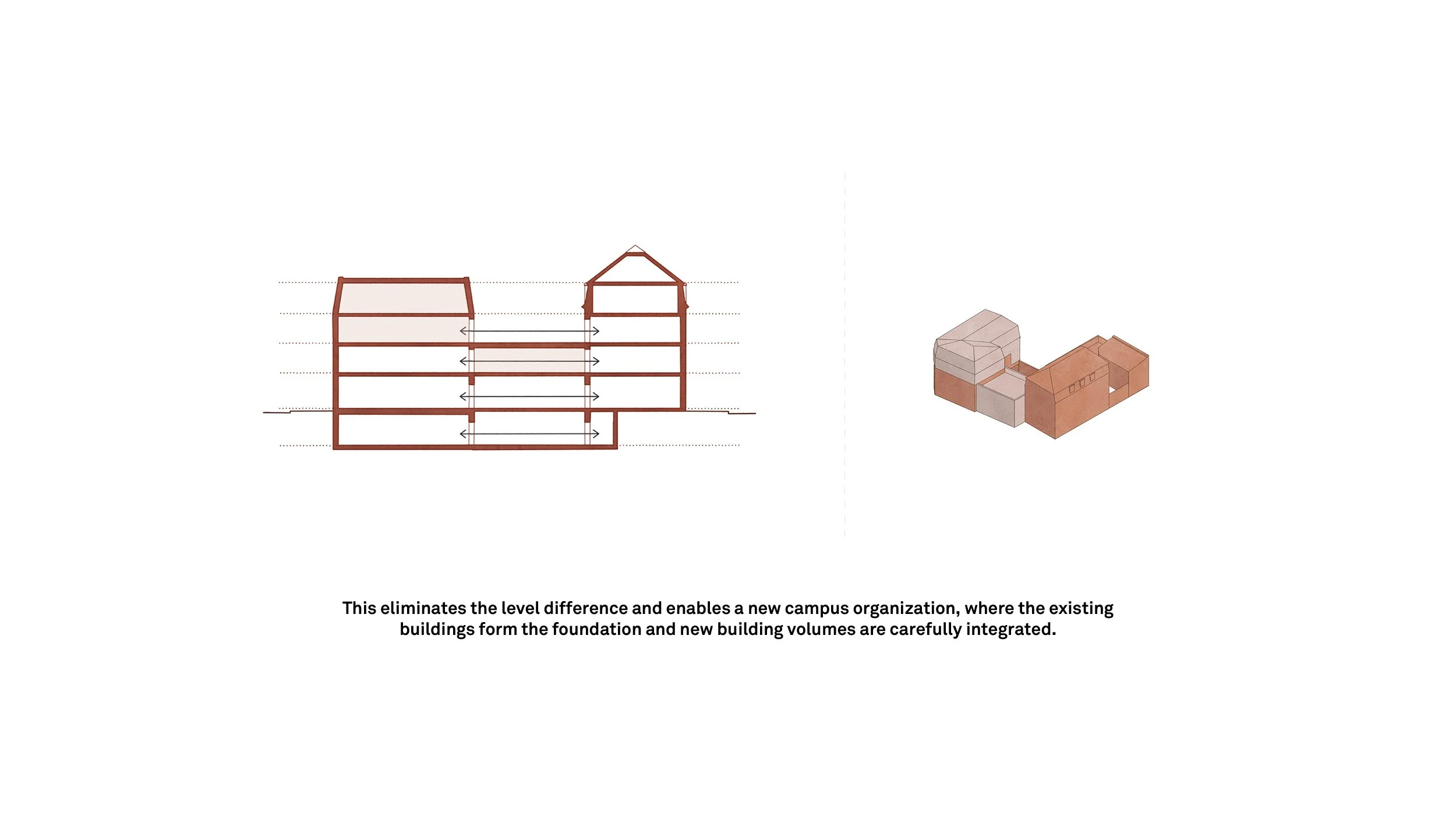
The central architectural intervention is the removal of an existing split-level building that currently fragments the site and creates significant barriers to accessibility and orientation. By removing this "missing link", two small and disconnected courtyards are united into a single green campus courtyard that becomes the social heart of the project. At the same time, the new organization establishes clear circulation, step-free access and intuitive wayfinding throughout the campus.
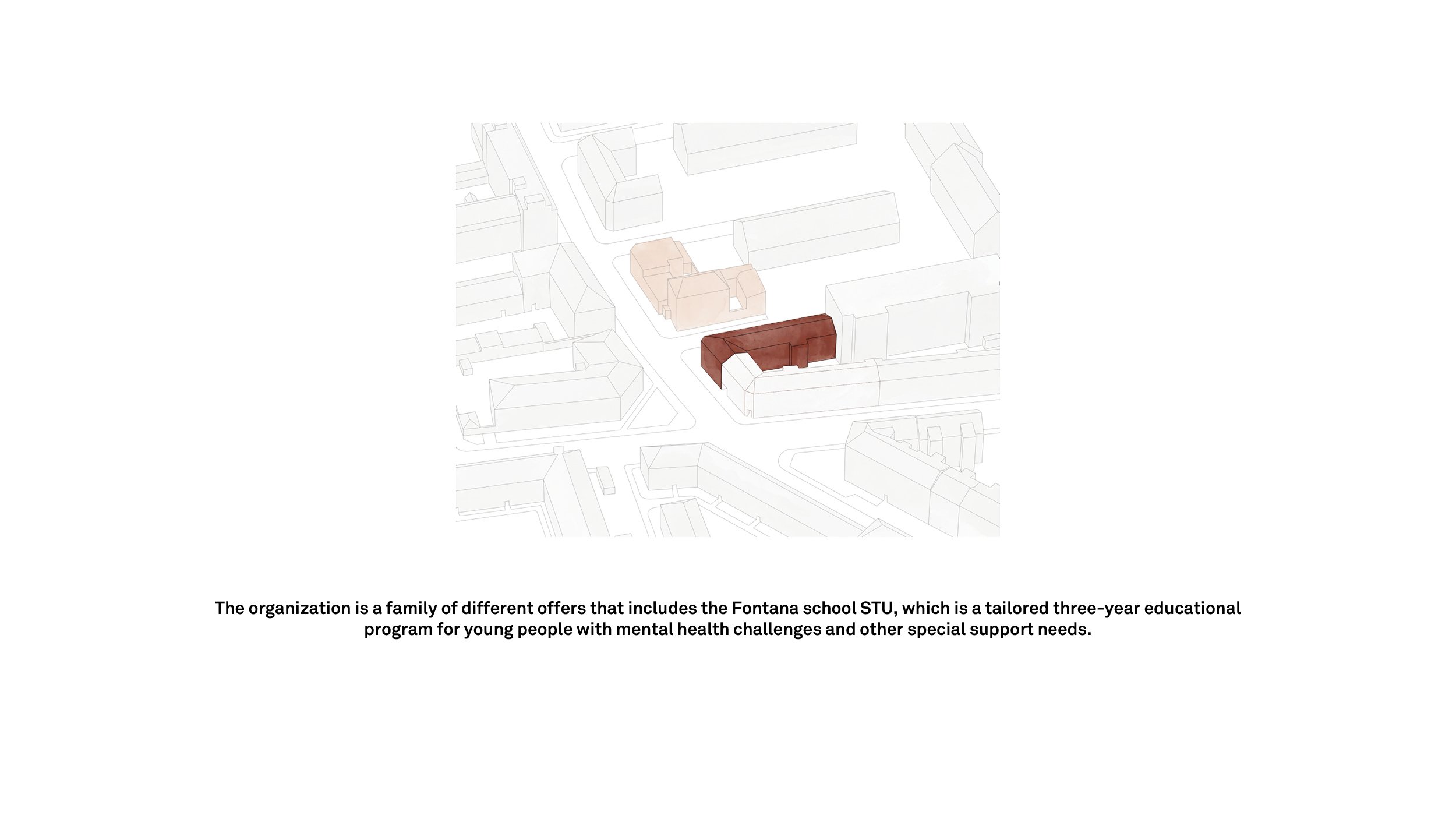
The campus is organized around two distinct identities. Fontanaskolen is gathered in a dedicated teaching building with its own entrance and learning environment,
Client
Collaborators
Julie Kirkegaard, Ingholt, Spangenberg & Madsen
Size
2.100 m²
Year
2026 -
Status
1st Prize, Ongoing